Natural gas · Downstream
Delivery challenge and intervention
[INSERT APPROVED PROJECT CONTEXT, MOESERV ROLE AND MEASURABLE RESULT]
Evidence neededEnergy · Infrastructure · Programme delivery
Moeserv Technical Services connects engineering, project management and delivery support for energy and infrastructure programmes across the United Kingdom.
UK marketEnergy and infrastructure
Lifecycle supportFrom definition to handover
Aberdeen baseUnited Kingdom
EstablishedIncorporated in 2013
The client challenge
Energy and infrastructure programmes rarely fail because one activity was overlooked. Exposure grows between engineering, approvals, procurement, construction and commissioning—where ownership becomes blurred and decisions arrive late.
Moeserv's role is to help clients create a more connected view of those interfaces, so technical choices can be made with delivery consequences in sight.
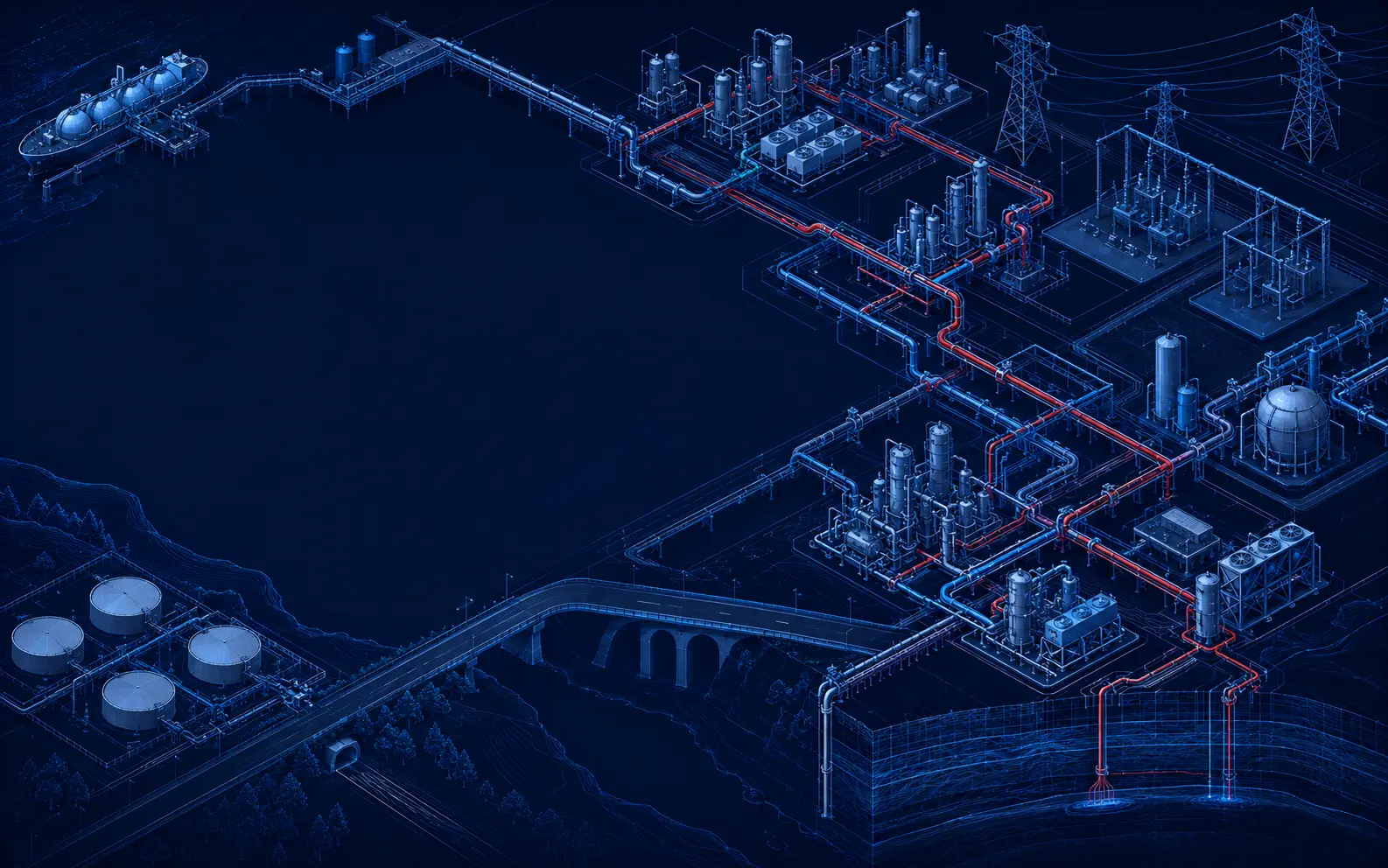
Connected delivery system
Moeserv connects engineering definition, supply routes, construction logic and acceptance evidence so that project decisions reflect their downstream consequences.
What we help clients achieve
Clearer decisions, better-connected interfaces and a controlled route from project definition to operational readiness.
View all servicesEngineering and design support that connects requirements, constructability and commissioning from the outset.
02Project management and controls that organise scope, interfaces, schedule, cost and risk around the decisions that matter.
03Procurement and supply-chain support focused on package strategy, supplier coordination, expediting and delivery readiness.
04Construction, completion and commissioning support that clarifies handovers, acceptance evidence and operational readiness.
Project evidence
The current website does not provide enough approved project evidence to support procurement review. The private build therefore uses explicit evidence placeholders rather than fabricated case studies.
View the evidence frameworkNatural gas · Downstream
[INSERT APPROVED PROJECT CONTEXT, MOESERV ROLE AND MEASURABLE RESULT]
Evidence neededCCUS · Hydrogen
[INSERT VERIFIED SCOPE, DELIVERY METHOD AND OUTCOME]
Evidence neededInfrastructure
[INSERT APPROVED CASE STUDY AND PROCUREMENT-READY PROOF]
Evidence neededA connected delivery approach
A simple framework for aligning technical definition, delivery interfaces and acceptance evidence.
Clarify the outcome, requirements, constraints and evidence base.
Map technical, commercial and delivery interfaces across the lifecycle.
Establish ownership, decision points and reliable performance information.
Close the route to completion, commissioning and operational acceptance.
Moeserv perspectives
An insight programme built around questions clients ask before risk becomes delay.
Explore all insightsCCUS delivery
A practical view of interfaces, evidence and delivery assumptions that should be visible before commitments harden.
Read the perspectiveSupply chain
How required-on-site dates, technical approvals and supplier evidence can be connected into one delivery view.
Read the perspectiveProject controls
Why useful controls focus on decision latency and exposure—not simply reporting volume.
Read the perspectiveWhy Moeserv
Engineering, procurement, construction and commissioning are considered as connected delivery conditions.
Information is organised to make exposure, ownership and next decisions easier to see.
Current published capabilities span civil, structural, mechanical, electrical, piping and project delivery disciplines.
Claims requiring project proof, accreditation or client permission remain clearly marked until verified.
Start a useful conversation
Tell us what you are planning, where uncertainty sits and what decision comes next.